Nina Simone was tough. She was known and lauded for her mince-no-words, full-force vocals, delivered with fire. Her own compositions include “Mississippi Goddamn,” which you can tell before you hear it is no sentimental valentine to the “Hospitality State.” No, she was not a fan of their peculiarly selective brand of hospitality. This 1964 song of protest was taken up as an anthem by the Civil Rights movement and the single was banned in several Southern states (no doubt including the Hospitality State itself).
Her performance of “Feeling Good” is the ballsiest of the many cover versions of this showtune recorded over the years, by Sammy Davis, Jr., Michael Buble, Muse, and others. “Feeling Good” started out in the 1964 musical The Roar of the Greasepaint—The Smell of the Crowd, which was Anthony Newley and Leslie Bricusse’s follow-up to 1962’s Stop the World—I Want to Get Off. In the show, the song is performed by a character called “the Negro.” That sounds bad and it is bad, but not quite as awful as it may seem, since other characters in the show are nameless, including “the Kid” and “the Girl” (who, like all of the other characters, are white, so there is no one called “the Caucasian”). The show is all about hierarchies of existence, unfair advantages, and so on. The Negro represents someone more downtrodden than the show’s hero, and yet he triumphs, at least briefly, and sings about it in “Feeling Good.”
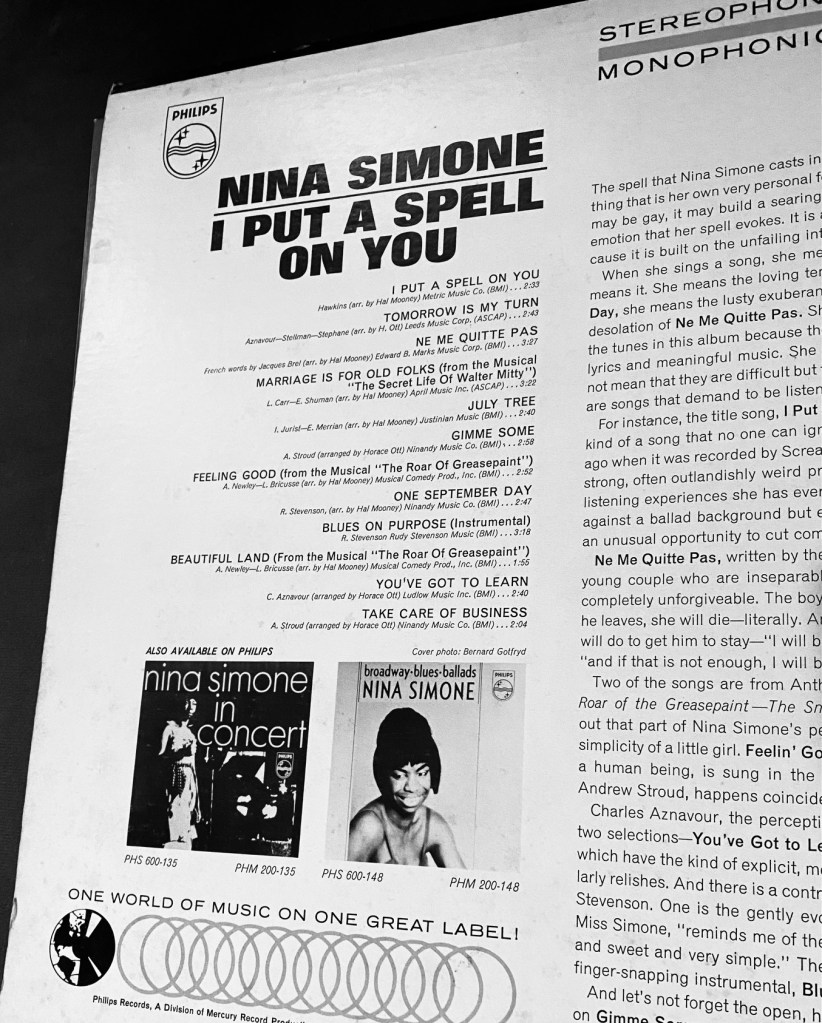
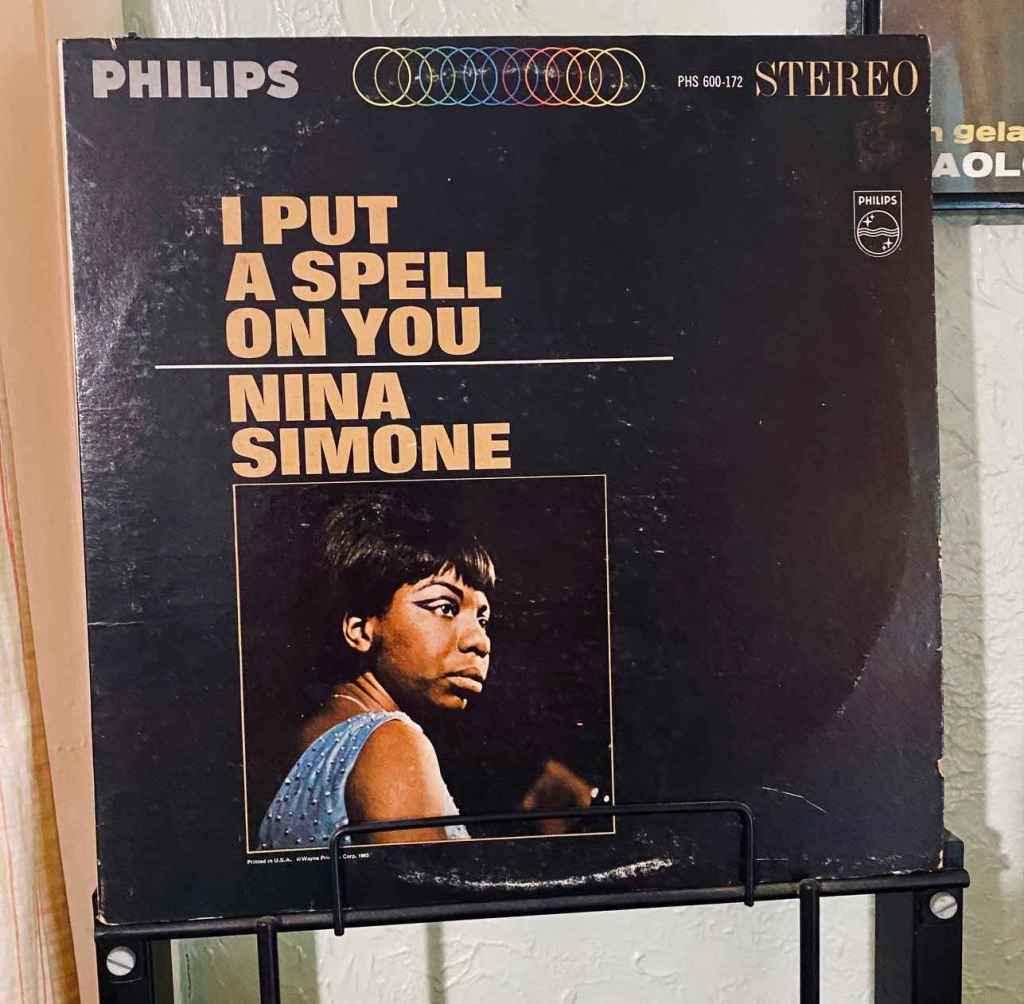
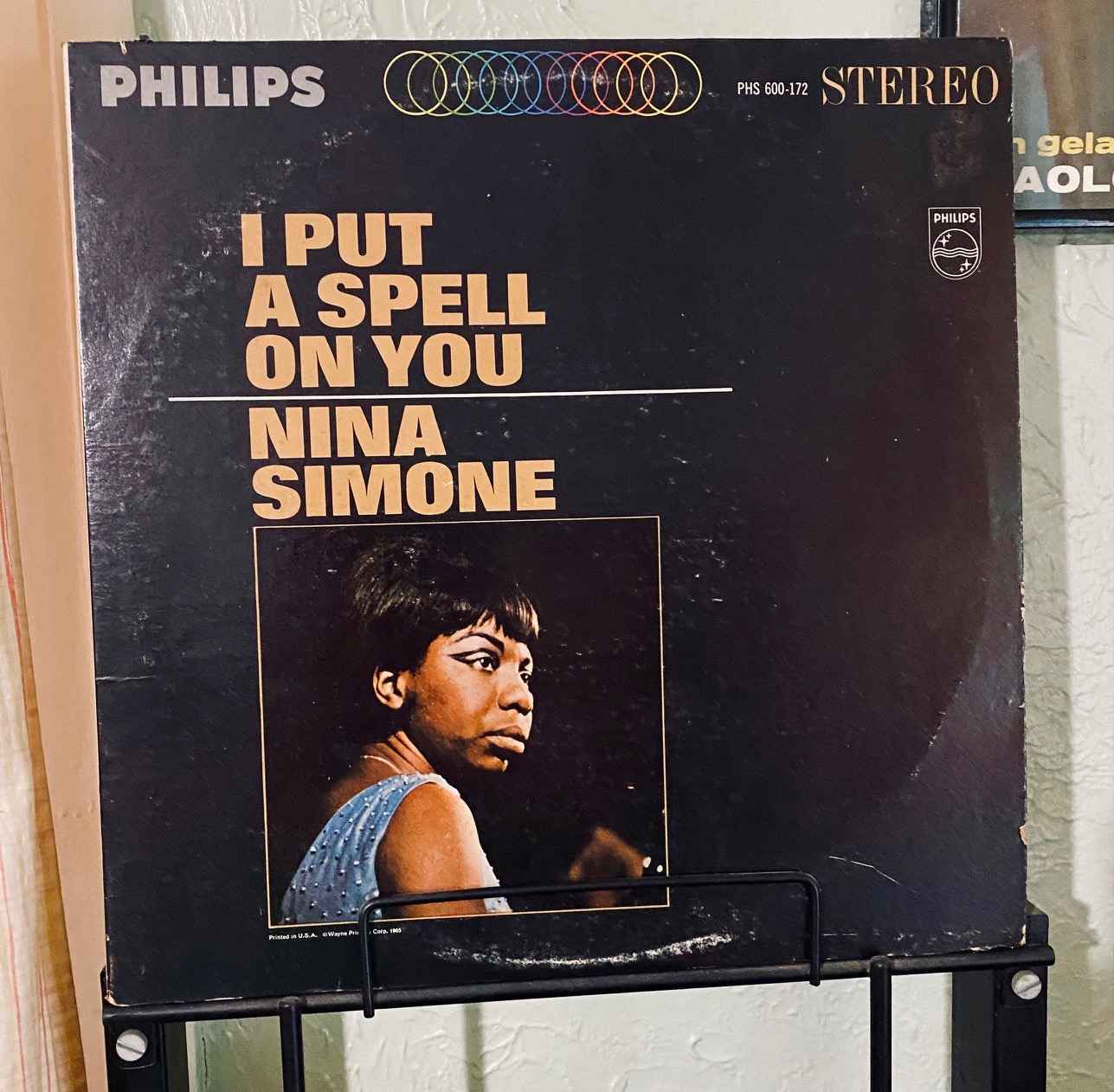
“Feeling Good” appeared on her 1965 album I Put a Spell on You, one of her best, and its power is almost rivaled by the album’s title song. But like every Nina Simone album, there’s a wide range of moods on display. Nina wasn’t only angry or brash and bold. A fine example of a much different emotion appears on the same album: her despairing rendition of Jacques Brel’s “Ne me quitte pas.” I don’t understand the French lyrics, but I know this lady certainly ain’t feeling good here; in fact, she seems to be feeling downright suicidal. The English lyrics, with the title “If You Go Away,” were written by, of all people, Rod McKuen, he of the wispy “come into my arms, bonnie Jean.” Brel created music of aching beauty, often tinged with cynicism. Nina Simone here is not cynical. She is purely, honestly melancholy.
One of the things I like about Nina Simone is that you can’t pin her down to any one genre. Alexa tries and fails miserably, feeding me, on Amazon’s “Nina Simone Station,” Frank Sinatra, Louis Armstrong, Norah Jones, and so on. True, there are a couple of facets of Simone that are Sinatra-adjacent (and her records are filed right before his in my LP collection), and the same goes for Louis and Norah. But she delivers the blues like Frank could never imagine, and gets deeper than Louis and rawer than Norah. Simone is usually categorized as jazz, and that’s probably as good a place as any other, if you really must put her in any one place. But she was very comfortable with songs from all eras of musicals, from Porgy and Bess to Hair. She put her stamp on pop songs like “To Love Somebody” and Randy Newman’s “Baltimore,” which he wrote specifically for her. (She initially nixed it but then came around.) She also had her way with folk, African, R&B, gospel, and rock. She even found spots where she could show off her classical piano chops. And, of course, there’s her blues. But just understand—if you listen to her 1967 album Nina Simone Sings the Blues, you’re not just gonna get straight blues. You’re gonna get some tastes of showtunes, protest songs, gutbucket, and the most up-tempo, sizzlin’ version of “House of the Rising Sun” you’ll ever hear. And everything she recorded she made her own.
If you want the best work of Ms. Simone, you can pretty reliably go for any of the records she made with the Philips label, after she left Colpix in 1964 and before she went to RCA in ’67. Those before-and-after albums are mostly great, too, but she truly blossomed with Philips, and her third there, I Put a Spell on You, carrying “Feeling Good” and its partners, is a high point. But her first Philips, Nina Simone in Concert, includes “Mississippi Goddamn” and other spirited Civil Rights-themed performances. Her follow-up, Broadway-Blues-Ballads (see that fine genre-mixing?) featured “Don’t Let Me Be Misunderstood,” which, like “Baltimore,” was written especially for her, and her arrangement of “See-Line Woman.” Pastel Blues and her final three for Philips are gems the whole way through.
Nina made notable recordings of songs of anger that can take you aback; songs of pride that are absolutely bursting with it; wistful songs that are so tender and vulnerable you may tear up.
She delivers “Feeling Good” like she feels so good she can hardly stand it. It’s like she is saying, “Damn right, I’m feeling good, and why the hell shouldn’t I? You got a problem with that? Well, do you, punk?” It’s a Nina tour de force, opening with Nina singing the first verse a cappella before the big brass of arranger Hal Mooney paces her to the end, when Ms. Simone goes out ecstatically singing in tongues. It’s startling and delicious. She’s feeling good and she’s got you feeling good, too.
Nina Simone may not appear very often on lists of best or favorite vocalists. Even I sometimes forget poor Nina when I’m thinking of my favorites, and I love listening to her. But her voice isn’t pretty, even when she is singing pretty songs. It’s raw, sometimes quavery, maybe sometimes a bit too brash. But if being a great vocalist means conveying the meaning of a lyric and connecting it to a listener, I’d say Nina Simone should be right around the top of that list.
 Reminds Me of a Song
Leave a comment