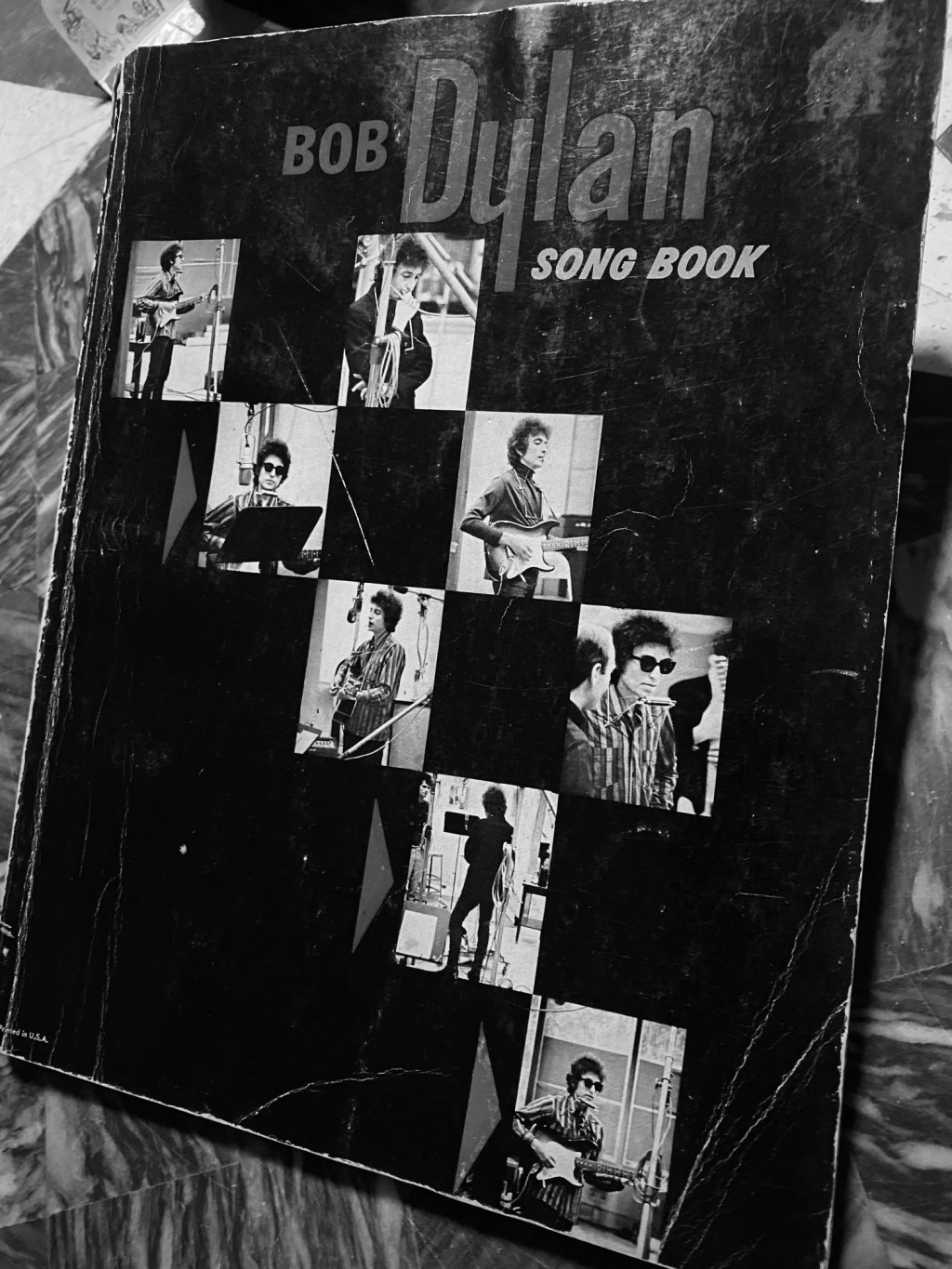
How did I wind up in Abilene, Texas, watching Bob Dylan, who at 84 years of age was performing the final show of his 2026 Rough and Rowdy Ways Tour? My wife Donna and I sat in the midst of a full house of others in Abilene to see Bob. Why had they come? Hopefully, not to hear Bob Dylan’s greatest hits.
I looked around at the full-house audience, comparing it to the audience at the last concert we’d attended, The Isley Brothers, featuring brother Ronald Isley, who’s the same age as Dylan. He was joined by his younger brother Ernie. Both shows’ audiences primarily skewed to AARP members, but the Isley crowd was probably about 90% Black, while the Dylan crowd appeared to be about 100% white. The Isley Brothers fans were there to hear the hits. That’s what live concerts by these giants of music usually are for, to let their fans hear the music they’ve loved to hear on the radio, on their albums, on streaming services. If I go to a Stones concert, I can expect to hear “Start Me Up,” “Satisfaction,” and other popular favorites, rendered as near as octogenarian Stones can get to the hit recordings. The Isleys did “It’s Your Thing,” “Who Is That Lady?” and other big hits.
But that’s not what a Dylan fan is gonna get. Dylan focused on selections from his last album, Rough and Rowdy Ways. He sprinkled in a couple or three classics, but he didn’t do those classics in a way anyone could recognize. When he went into “All Along the Watchtower,” the familiar lyrics tipped me off, but the unfamiliar music accompaniment was making the words difficult to reconcile. When I heard “And the wind began to howl,” I knew I was (kind of, in a way) hearing a Dylan classic. At one point in the concert, the band started off a minor-key shuffle rhythm that puzzled Donna and me. She said it sounded like “Puttin’ on the Ritz,” and I agreed. Dylan started singing and reached the line “When I paint my masterpiece…” Oh, okay. When you’re an 84-year-old cultural icon, you can do your songs any old way you choose it. It would make for an engaging guessing game. But not a nostalgia night.
If these concert-goers had come hoping to enjoy the added entertainment value of visuals—movement, backdrops, follow spots—they would be disappointed. There was no movement, there were no visual elements. Before the show started, the houselights were up and the stage was dimly lit. The stage lighting remained minimal as the band entered, wearing all black. Bob then came on, wearing a gray hoodie, and stood at an electric piano. Nobody on stage moved for the show’s duration. And the lighting never got any brighter. The boys in the band were stationary silhouettes, pretty much, to us in the cheap seats. (“Cheap seats” were about $135; oh, for the days when I saw The Who for five bucks.) It wasn’t until partway through the opener that the houselights were even turned down.
If people had come to hear Bob engage in some patter, some cheery repartee, they’d soon learn that that’s not what a Dylan fan is gonna get. There was, of course, no “Howdy, Abilene! Are you ready to party?!” From Bob there was nothing: no welcome, no banter, no jokes. (On the rare occasions that Dylan has told a joke or made a quip during a show, it’s been news.) No song introductions, and only the briefest of band introductions, and that was more than two-thirds of the way through.
So, why were my fellow concert attendees and I there, if not for nostalgia, entertainment, pizzazz? Why, to see a legend, of course. Call it a possible last chance for me, a not-much-younger-than-Dylan off-and-on fan, to see one of the main cultural and musical icons of my era. I sat at the show, as it was about to start, wondering why I’d never gotten around to seeing Bob Dylan before. I’d seen some other personal heroes: Sly Stone, Paul McCartney, Randy Newman, Ella and Neil and Joni and Brian. But never Bob.
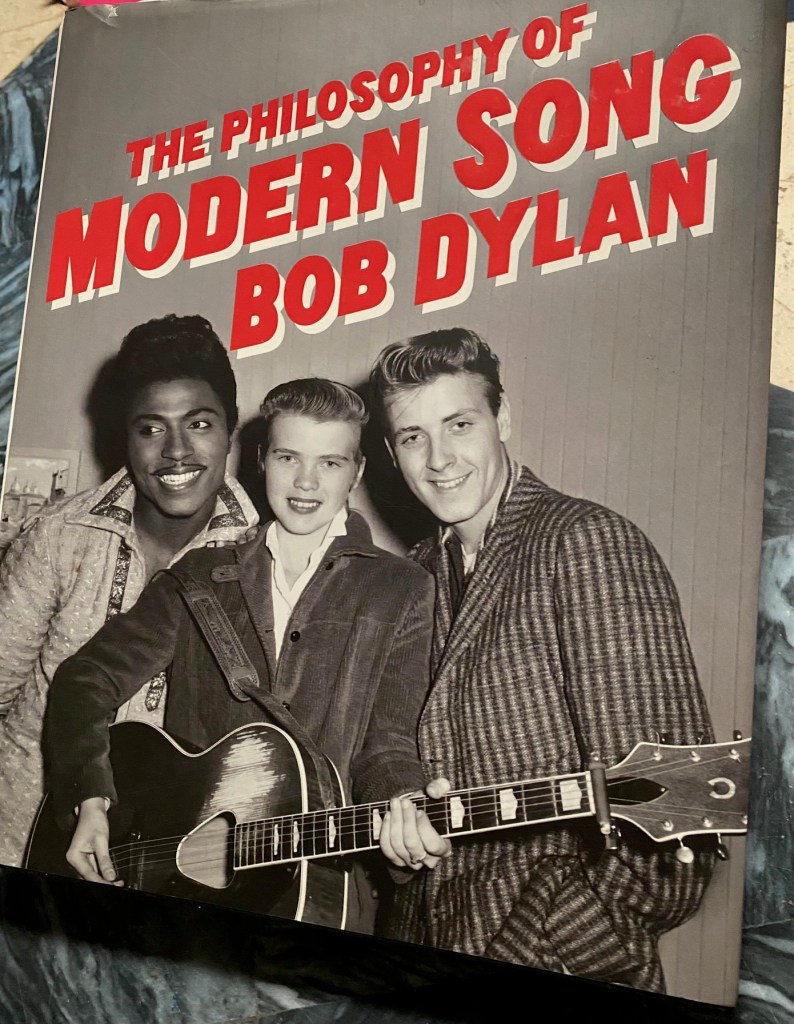
I’d missed hundreds of opportunities to see Dylan over his many years of touring, closer than Abilene to my Dallas home and when he was not in his mid-eighties. It just never had occurred to me to go see him. I really enjoy his albums from 1998’s Time Out of Mind on, but I was less familiar with his 2021 Rough and Rowdy Ways album, which he was featuring in these shows. I’d studied up a bit in recent days, listening to “I Contain Multitudes,” “Crossing the Rubicon,” “Goodbye, Jimmy Reed” and other selections. I also streamed them as my wife and I traveled west. She was disappointed that there was no “Tangled Up in Blue,” the one song of his that she really liked, in the mix. But she was game. I convinced her it’d be worth spending a night in Abilene to see a legend in person.
And, sure enough, it was worth it.
I had read and pondered the lyrics of “I Contain Multitudes”—its title taken from Walt Whitman’s “Song of Myself.” It is a song of Dylan’s self, of his long public life of contradictions. That was reflected in his song choices for the show. “All Along the Watchtower” was an eerie 1967 John Wesley Harding cut made popular by Hendrix’s dazzling cover version. He did a song from his country album, Nashville Skyline, and one from Oh Mercy!, a late-eighties album recorded in New Orleans. He performed two covers, one a Bo Diddley song issued in 1962 and the other an Eddie Cochran from 1958. He closed, fittingly, with a 1981 song from his “Christian period,” the beautiful “Every Grain of Sand.” The guy’s had a lot of phases. Multitudes.
I went to Abilene, dragging my wife along, to witness this contrary, self-contradictory music man of multitudes while he’s still at it and while I can still get out to see him. No other reason necessary.


Leave a comment