You could say that the pre-disco Bee Gees were sappy, saccharine, maybe even a bit cloying. I’d agree with that. But they offered the best of that period’s sappy and saccharine songs, and the pinnacle, for me—never cloying—was “How Can You Mend a Broken Heart.”
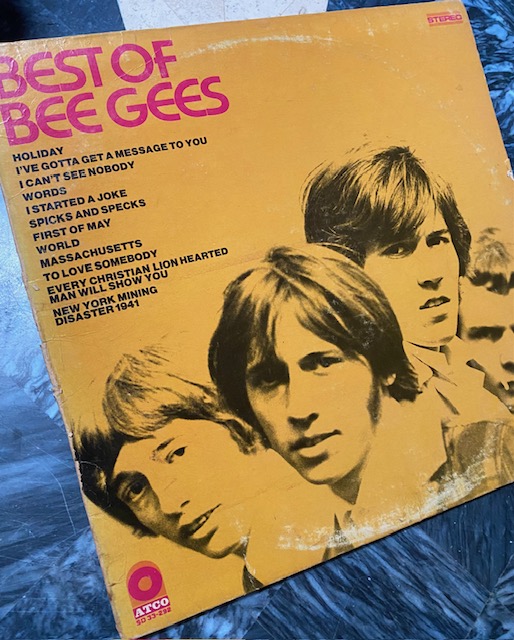
Barry’s the Bee Gee with the colossal teeth, Robin’s the one with the free-form teeth, and…wait—who’s the other one? Andy? Oh, right, Maurice! He’s the one with just regular old teeth, the one I always forget.
Barry, the oldest, had the slow vibrato, sometimes breathy and sometimes punchy. Robin was the warbler. Robin’s twin Maurice…well, he’s the one who’s always blending with Barry and Robin. When you do hear him singing lead, like on the Trafalgar song “It’s Just the Way,” he sounds like a Bee Gee with the effects turned off. The Bee Gees had a look and a sound that were easy to lampoon (the best I’ve seen being the Hee Bee Gee Bees’ “Meaningless Songs in Very High Voices”), but most of the excesses we love to parody were from the synthed-up, discofied period after they’d switched from the Atco label to RSO.
The Bee Gees had had a rough patch after their early run of hits. The brothers Gibb didn’t want to be the Brothers Gibb anymore, but when they tried to go their separate ways, with solo albums and even a Barry-Maurice duo album, they failed. Back together again, the boys scattershot until they came up with the winning formula that revived their career and made them a whole shitload of money. It helped that they plugged themselves easily into the disco zeitgeist of the mid-seventies.
“How Can You Mend a Broken Heart,” one of the brothers’ last American pre-disco-era hits, was also their biggest to that point. It reached #1 in 1971. After that feat (except for “Run to Me,” which made it to #16 in 1972), the hit machine stopped working until they found their disco shoes in ’75.
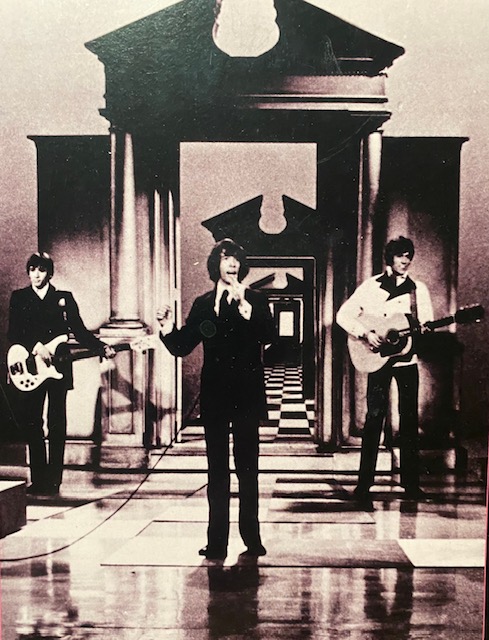
“How Can You Mend a Broken Heart”was co-written by Barry and Robin, and Barry and Robin shared the lead vocals. Maurice got in there on harmonies, and also on bass, piano, guitar, and organ. (Go, Maurice!) It makes for a great sing-along song. Its lyrics are kind of sad, even maudlin, but there’s a little hope offered at the end of the chorus. The singer is asking for help, in order to be able to “love again.”
And we can’t forget about the even earlier Bee Gees, the warblers of yore (the yore before the disco yore). Back in the mid-sixties, when I was a die-hard Beatlemaniac, the Bee Gees were among the groups called “the new Beatles.” I couldn’t hear it then, but listening to Bee Gees 1st now, I can hear the boys really trying to sound Beatle-ish, nowhere more than on the song “In My Own Time.” It’s pretty much a copy of (okay, let’s say homage to) “Taxman,” which had come out a year earlier. Their harmony, just the four words of the title, sound more like John, Paul, and George than John, Paul, and George. The bass line is a rip-off of (okay, tribute to) Paul’s “Taxman” bass line. Still, “In My Own Time” is a terrific song, the most kickass music the Bee Gees ever made.
My favorite thing about the Bee Gees is the tight, sibling-advantaged three-part vocal blend of those pre-disco songs. “I’ve Gotta Get a Message to You” is a premier example of the Bros’ punchy, locked-in harmonies that thrilled me so much. It was their first top-ten hit in the US and appeared on the 1969 album Idea. It’s in the same pool with “Massachusetts” and “I Can’t See Nobody,” two harmony-loaded numbers from around the same time with similar structures, but “Message” edges them out, because this pop hit is sung from the point-of-view of a death-row inmate.
Bee Gees 1st(which was actually not their first album but their third, but was their first that was released internationally) gave the world three big hit singles. One of them, “To Love Somebody” is the Bee Gees song which I predict will be among the two or three rock-era standards the Bee Gees will be remembered for when we’re all gone. It was written with Otis Redding in mind, evidently, and it does have a soulful quality to it, even as delivered by the brothers’ madrigal-ish pipes. “Words,” a non-album #15 hit from 1968 is another of the group’s songs that may become an American Songbook standard. It’s the versatile kind of song that could be sung by campers sitting around a fire or performed by a diva on a TV special. It’s a personal favorite because it was the song I’d sing at parties in order to do my Bee Gees impersonation, exaggerating the vocal tremolo, and drawing it out ridiculously on the final tagline: “…to take your hah-ah-ah-ah-art a-a-a-a-way-ay-ay-ay.”
The third potential “timeless classic” the Brothers offered us is “How Can You Mend a Broken Heart.” No gimmicks, no dance breaks, no synthesizers, just Barry, Robin, and the ever-supportive Maurice, offering up a modern standard for our dining and possibly even dancing pleasure.
I don’t mean to slight the hugely influential disco Bee Gees. I kinda missed the whole disco era. I always felt awkward trying to finesse the smooth dance moves and felt uncomfortable in clingy shirts. But I am nothing if not open-minded about music, and there truly was some good music that transcended the lit-up dance floors, such as “Disco Inferno” and “Le Freak” and, yes, “Stayin’ Alive.” The Bee Gees were powerhouses of that era, with a string of number ones that worked either of two sides of the zeitgeist, pulsating dance numbers or loftily sweet love paeans, all featuring that ultra-high upper register the brothers had a lock on.
But I’ll take “How Can You Mend a Broken Heart” any day over the big, slick hits everyone remembers them for. Props on it to Barry, Robin, and, of course, Maurice.


Leave a comment